How Is the Cost of a 3D Print Worked Out? | Guide
Guide: what the cost of a 3D print depends on, grams of material and machine hours. A worked example with numbers and four ways to make your part cheaper.
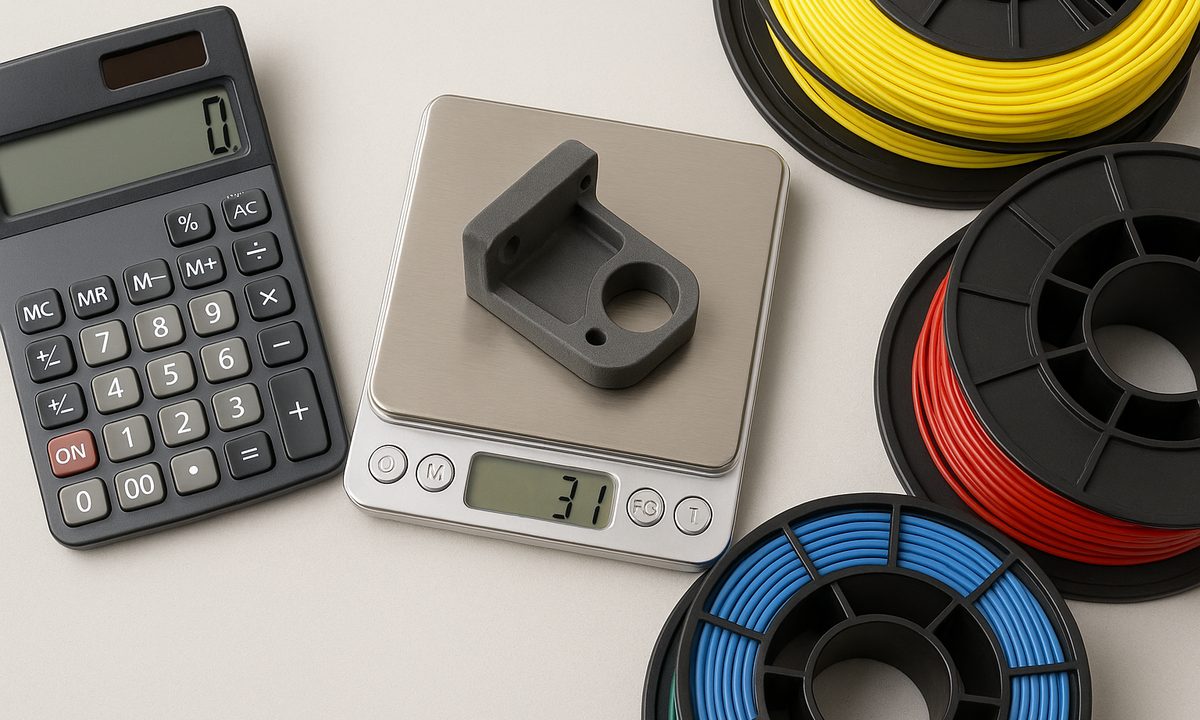
This page explains how the cost is worked out. If what you want is the figure for your own part, go straight to the 3D printing price calculator: that is where you estimate it and ask for the fixed price.
Where does that number come from? It isn’t random: it comes from two things you can measure — the grams of material and the print hours — plus a few factors stacked on top. Understand them and you’ll know exactly where to adjust to pay less.
What the price is made of: grams and hours
A part’s cost comes from five specific factors:
- Material (grams): it’s estimated from the grams of filament or resin the part uses. PLA is the most economical; PETG, ABS, TPU and ASA cost a bit more; resin, for maximum detail, is the premium option.
- Print time (hours): the machine builds the part layer by layer. A part can take under an hour or more than a day. More hours mean more machine cost, electricity and supervision.
- Infill: the percentage of material inside the part. A decorative object is almost hollow (10-15%) and uses few grams and few hours; one that bears weight is nearly solid (50-80%) and rises on both.
- Post-processing: sanding, painting, sealing or joining large parts is hands-on workshop time — what shows up most on the invoice.
- Design (model): if you don’t bring a file, the part has to be modelled. 3D design from a photo or sketch ranges from €20 to €60 and is paid once.
A worked example with numbers
Picture a phone stand in PLA, using your own STL file. It weighs about 55 g and takes 3.5 h to print at 15% infill, with no post-processing. That job sits squarely in the medium part range (€15-40) and comes out around €18-22.
Now change the same stand for outdoor use: ASA material (sun-resistant), 50% infill so it holds up, and a final sanding. It uses more grams, takes more hours and adds hand work, so the same object moves toward €30-40. Same shape, different price: you decide it with those variables.
Table: which factor matters and how
| Factor | How it affects the price |
|---|---|
| Material (grams) | More grams and technical materials (resin, ASA) → more expensive |
| Print time (hours) | More machine hours → more cost |
| Infill | From 15% to 80% raises grams and hours together |
| Size and volume | The factor that moves everything most |
| Post-processing | Sanding, painting or gluing = added manual time |
| 3D design | Without a file, modelling is added (€20-60) |
| Quantity | In a run, the design is shared and drops per unit |
How to make your part cheaper
- Lower the infill: if the part bears no load, 15% is enough and you save grams and hours.
- Mind the orientation: a well-oriented part needs fewer supports, uses less material and needs less sanding.
- Choose the material by use, not by habit: if it’s decorative, PLA; don’t pay for resin “just in case”.
- Adjust the size: many parts work just as well 20% smaller, with fewer grams and fewer hours.
So much for the theory. For the figure on your own part, the tool is the 3D printing price calculator: an instant estimate and a free fixed price within 24 h. If you would rather see materials and finishes in detail, they are on the 3D printing service page.
Frequently asked questions
How is the price of a 3D print calculated?
You add up the grams of material the part uses and the machine's print hours, plus infill, hand finishing, and 3D design if you don't bring a file. A small part runs €5-15 and a medium one €15-40.
What is the 3D printing cost per hour?
We don't charge the customer a fixed hourly rate: print time is built into the final figure alongside the material. It still matters a lot, because more hours mean more machine cost, electricity and supervision.
Do you pay per gram of material?
Material is one of the factors: it's estimated from the grams of filament or resin the part uses. PLA is the most economical and resin the premium option, but the final weight depends on size and infill.